66. Waterford and Surrounds - Republic of Ireland
We drove from Dublin to Waterford via the east coast and I must say that hiring a car in Ireland was a good move. The Golf was economical and had grunt when required. Even though the price of fuel was nearly 3.00 AUD a litre, it ended up using just under 4 litres per 100km.
The car.

The roads were great and the scenery was as beautiful as the Sunshine Coast Hinterland. We didn't stop anywhere for long as we needed to get to the pet sit the same day. It was so green considering it was the end of summer and we had perfect weather for the entire time we were there.


Waterford was having a street festival one weekend.


Local farm animals were on display.

A very talented musician

The locals were making the most of the Indian summer with Guinness aplenty. The Irish are right when they say it tastes better in Ireland!

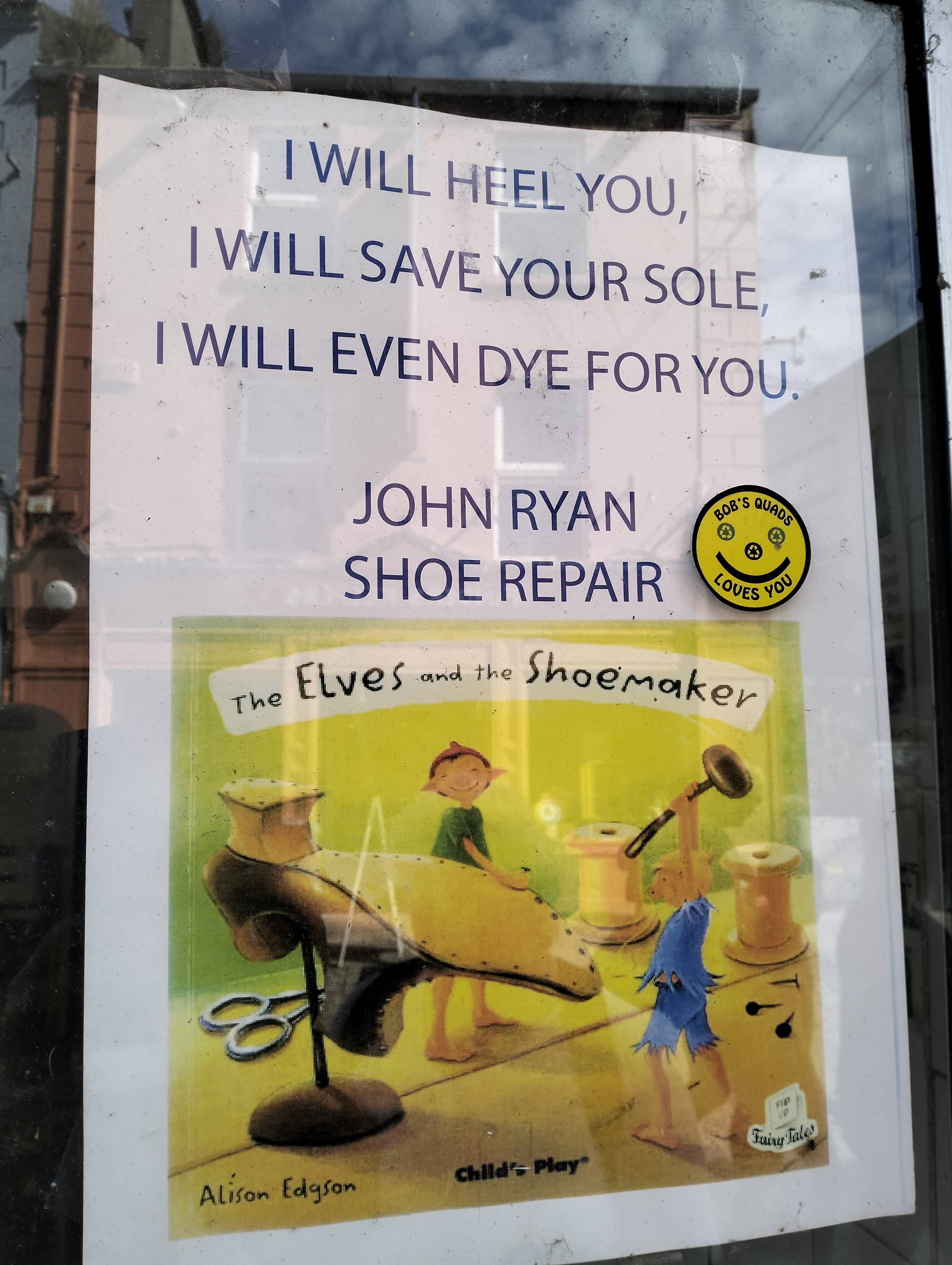
A bit of humour at a local cobbler's.
They don't give way in Ireland, they 'yield'.

Waterford is famous for its Viking heritage. The name Waterford comes from the 9th-century Viking name of Vedrarfjord. The strategic and trading importance of the three sisters rivers, the Nore, the Barrow and the Suir that empty into Waterford Harbor, also played their part in the Vikings’ decision to build a dock at the joining of St. John’s River and the River Suir.

Reginald's Tower
Originally the site of a wooden Viking fort, the stone tower owes its existence to the Anglo-Normans who made it the strongest point of the medieval defensive walls. Later it was used as a mint under King John before serving various functions under many English monarchs. Weapons, gunpowder and cannons have all been stored here reflecting various periods of Waterford’s turbulent history. The longboat is a replica of the ones used by the Vikings.

You can't go to Waterford without visiting Waterford Crystal.


A tour took us through the complete process of blowing glass through to the finished product. 60% of off-the-shelf glassware is still made here while 40% is made in their Slovenia factory. All one-off items are made in Waterford.
We were impressed by the talent required to perform the tasks. Each part of the production line requires an 8-year apprenticeship.
Before cast iron moulds took over, wooden ones were used up to 9 times.

The crystal bowl looks pretty ordinary after the initial blowing and shaping

That is, until the craftsmen get their hands on it.

All the design work is done by hand with cutting wheels

Here is a piece of glass with the 'Starry Night' by Van Gogh engraving. Again, all done by hand.

And a little bit of footage showing the craftsmen at work
A journey to Ardmore revealed a sleepy coastal village that is home to the ruins of St Declan's monastery, built in the 12th century. Ardmore is claimed to be the oldest Christian settlement in Ireland. The tower was used as a belfry and refuge.


the height of the doorway was extraordinary.
A ladder was used to get people in and then hoisted inside.

Max makes 4 legged friends wherever she goes.

The flowers are still in bloom with many flower boxes and baskets in their full glory.

We took a ferry across the river on our way to the Hook Lighthouse.

The seaside villages all had a distinct feel.

Just before the Hook Lighthouse turn off, we came across another ruin. Templetown was the headquarters of the Knights Templar in Wexford. This religious military order was founded in the 12th century to protect Christian pilgrims travelling to the Holy Land. By the time of the Norman conquest of Ireland, they had become wealthy landowners and bankers throughout Europe.


The graveyard contains a rare example of an Irish Knights Templar grave slab. It is rectangular in shape and is decorated with a cross and a lamb. I had to find it!


Perfect weather and countryside.

Maeve accompanied us on the trip to the Lighthouse which is still operational today

And another ruin sitting in the middle of a farm paddock with Max hunting and gathering blackberries.

Another day trip took us to Tipperary and onto the Grange Stone Circles.

A few minutes out from Tipperary are the Grange Stone Circles. One large and one small.
They were built circa 2,200 B.C. after the arrival of the Bronze Age people in Lough Gur. It is a ritual site akin to our churches of the present day and also served as an astronomical calendar. The entrance to the circle lines up with the sunrise on the day of the summer solstice.

The entrance on the east side

Tried to capture the feel the circle was giving me.
The smaller circle

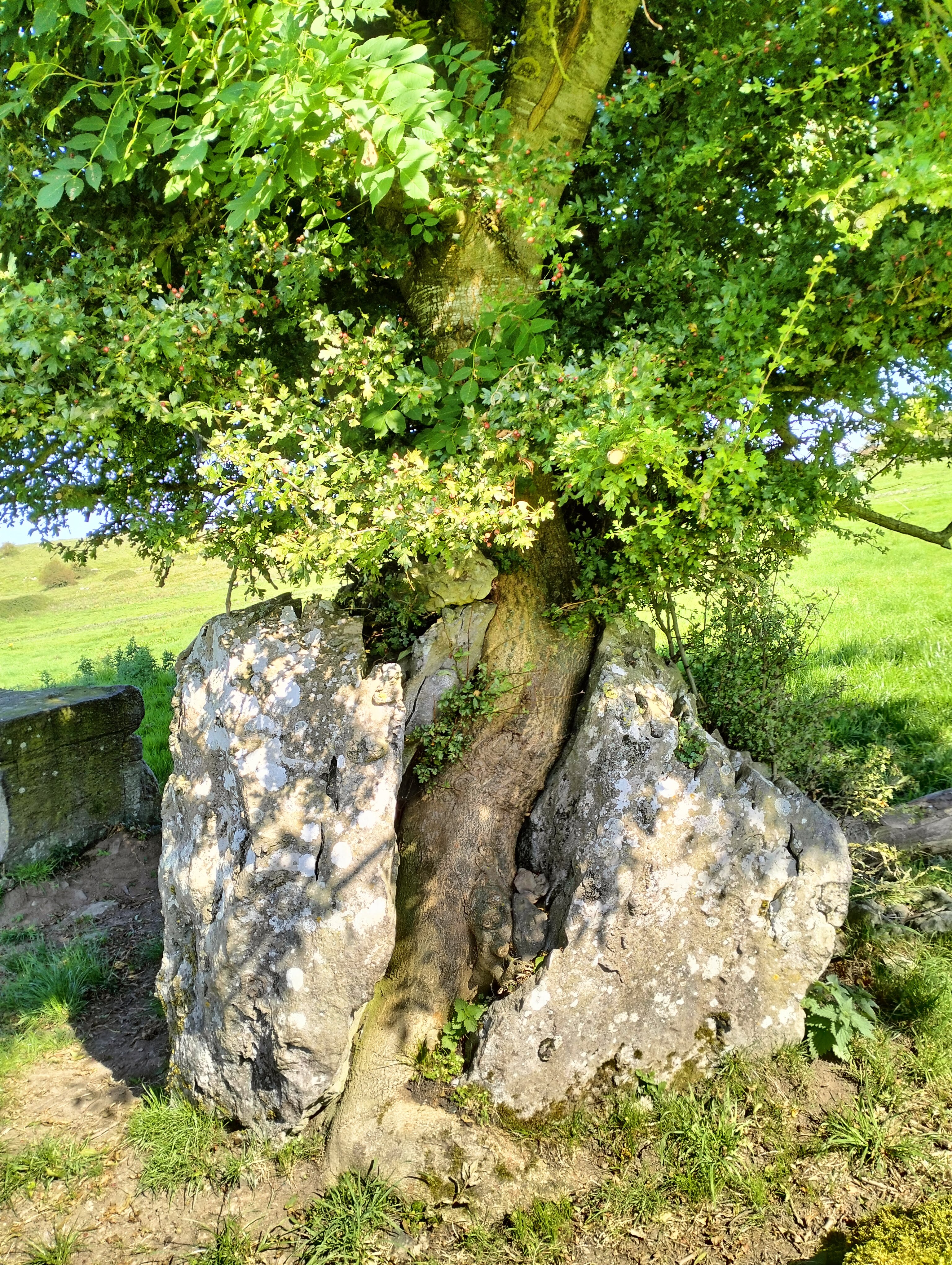
How powerful and persistent nature can be


Wow Paul. Great Irish blog post. Loved it. You gave me a real feel for the country, and what stunning weather you had.
ReplyDeleteJust full of history and so verdant! Amazing craftsmanship with the crystal. Gorgeous!
ReplyDeleteIt is a wonderful place. The people are its best asset.
DeleteWoops! Forgot to put my name!:)
ReplyDeleteHaha!
DeleteFabulous! Loved it all!!
ReplyDeleteAbsolutely stunning! You did so well portraying the feeling walking into The Grange Stone Circles; I felt I was right there too.
ReplyDeleteOh, btw, my wish list now has one Waterford ‘Stary Night’ vase please. Love it!